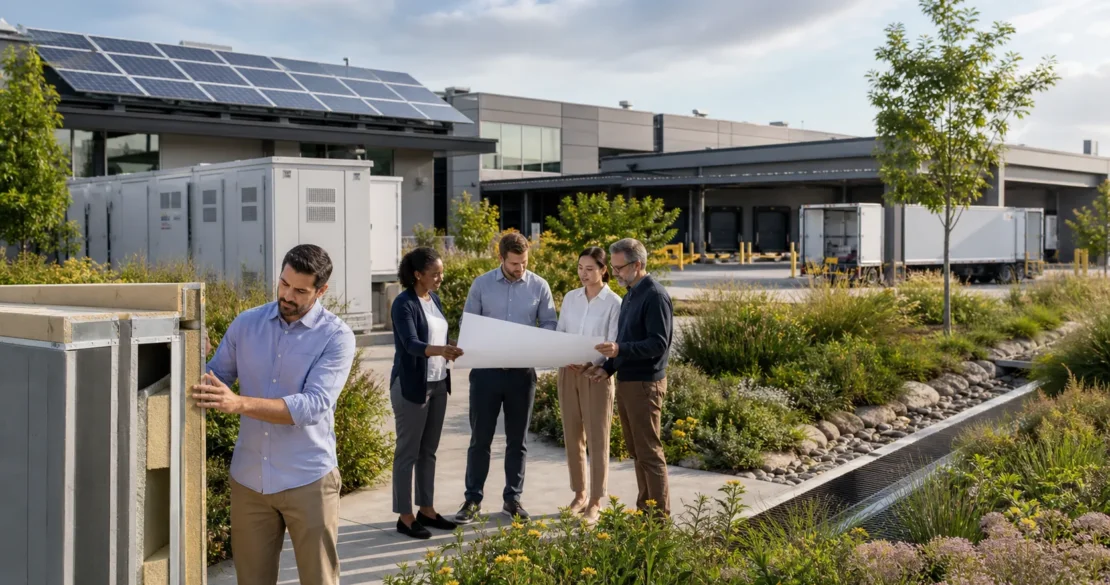
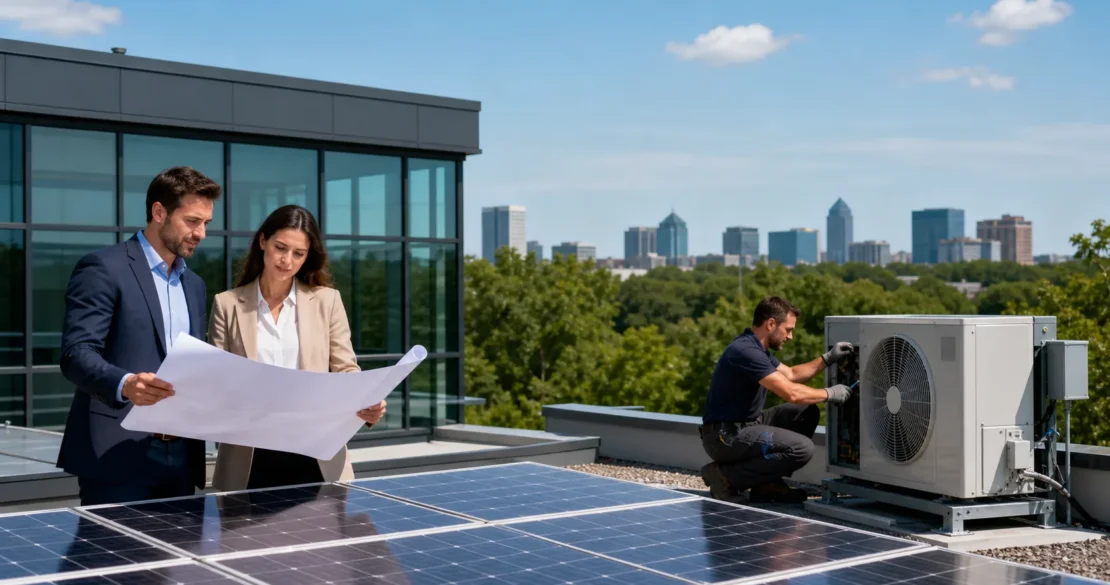
New Jersey Clean Energy Program incentives can help make high-performance commercial projects more attainable when they are considered early. For building owners and developers, the challenge is often balancing sustainability goals with capital planning, operating needs, and project schedules.
We encourage clients to treat incentives as part of the design conversation, not as a last-minute rebate search. Current offerings may support eligible efficiency upgrades, electrification measures, lighting, HVAC systems, controls, envelope improvements, and related energy-saving work. Because funding, requirements, and application steps can change, we recommend confirming current program guidance before relying on projected incentives.
Turn Energy Goals Into Stronger Commercial Projects
A qualifying product is not automatically the right choice for your building. The strongest projects use available incentives to support spaces that are comfortable, healthy, resilient, and practical to maintain over time.
Through architectural design, interiors, sustainable design, and project delivery planning, we help connect energy decisions to the way a building will actually serve its users. A community space may need better comfort and lighting consistency. An occupied office may need phased improvements that limit disruption. A historic property may need upgrades that respect significant existing features.
For commercial architects in New Jersey, the goal is not to chase every available incentive. It is to identify the improvements that support your building’s purpose while reducing unnecessary energy use and supporting long-term value.
Start with Incentive-Aware Feasibility Planning
Incentive research belongs in the earliest feasibility study, before a renovation scope or system replacement plan is fixed. We begin by reviewing the building’s existing conditions, utility service, operational needs, energy use patterns, and capital priorities. That early review can reveal where available programs may align with your largest opportunities for savings and better performance.
Rather than assuming the lowest first-cost option is the best investment, we recommend comparing practical scenarios. A feasibility study can examine baseline code requirements alongside higher-efficiency alternatives and weigh factors such as utility use, maintenance needs, occupant comfort, emissions reductions, incentive potential, and expected payback.
Design choices work best when they support one another. Building orientation, daylighting, envelope improvements, HVAC selection, electrical capacity, and interior layouts all affect energy performance. Historic buildings, occupied facilities, adaptive reuse projects, and phased renovations often need especially careful planning so improvements can be made without losing sight of operations, preservation goals, or construction sequencing.
Match Building Systems to New Jersey Incentives
Many commercial projects can explore incentive pathways through New Jersey’s Clean Energy Program and applicable utility offerings. Depending on current rules and project eligibility, we may evaluate opportunities connected to:
- Energy-efficient HVAC equipment and related controls
- LED lighting, lighting controls, and daylight-responsive systems
- Building automation and energy management systems
- Envelope improvements and efficient domestic hot water equipment
Equipment should never be considered in isolation. A high-efficiency HVAC system may not perform as intended if air leaks through the enclosure, controls are poorly programmed, or interior layouts create uneven temperatures. For larger or more complex projects, whole-building energy modeling or targeted energy analysis can help us understand how several measures work together.
Electrification also calls for early infrastructure planning. If your project is considering heat pumps, electric service upgrades, solar-ready roof areas, battery storage, or electric vehicle charging, we assess available capacity and future demand before construction begins. Incentives may offset eligible pieces of the work, but a successful installation also needs room for equipment, maintenance access, clear controls, and staff training.
Design for Documentation, Timing, and Verification
Incentives often depend as much on process as on performance. Programs may require pre-approval, approved equipment specifications, energy calculations, contractor records, inspections, or post-installation verification. Ordering equipment or starting work before required steps are complete can put eligibility at risk.
We recommend assigning responsibility for tracking program requirements early in project delivery. Clear specifications and construction documents can support that effort by identifying intended efficiency levels, equipment ratings, control sequences, commissioning needs, and submittal requirements.
Documentation can help protect the energy strategy from late substitutions or field decisions that change performance after the budget is established. Useful items to coordinate may include:
- Equipment cut sheets and efficiency ratings
- Controls sequences and commissioning requirements
- Contractor submittals and installation records
- Required inspection, testing, and verification milestones
Commissioning and post-occupancy follow-through matter, too. Equipment must be installed correctly, calibrated properly, and understood by facility staff. We see better long-term results when project handoff includes operations manuals, systems training, controls guidance, and a plan to review building performance after occupancy.
Help Project Teams Coordinate Incentive Decisions
An incentive-supported project brings many voices to the table: owners, architects, engineers, energy consultants, utility representatives, contractors, construction managers, facility teams, and financial decision-makers. Each group holds information that can affect design quality, eligibility, budget, and schedule.
Our role is often to help turn broad energy goals into understandable design decisions. An owner may focus on operating savings, while a facilities manager needs simpler maintenance and tenants care most about comfort and indoor air quality. Thoughtful planning can identify options that serve several priorities at once.
Coordination becomes even more important when tenant improvement schedules, occupied-building phasing, procurement lead times, preservation requirements, or multiple funding sources are involved. We also recommend confirming whether state incentives can be combined with utility programs, federal tax incentives, local financing tools, or other available support. Because rules vary, qualified tax, legal, and energy professionals should review current guidance before projected savings are included in financial planning.
Carry Incentive Decisions Into Lasting Building Value
New Jersey clean energy incentives have their greatest value when they support durable outcomes: lower operating costs, more consistent comfort, improved resilience, reduced environmental impact, and flexibility for changing community and business needs.
A practical roadmap begins with understanding current building performance and defining clear operational and sustainability priorities. From there, incentive pathways can be reviewed before final design decisions are made, with documentation and verification milestones built into the project schedule. Thoughtful commercial design can turn energy investments into better places to work, learn, receive care, serve communities, and support local economic growth.
Align Incentives With Lasting Building Value
At SAAarchitects, we help owners connect energy goals with design decisions that support durable, high-performing commercial environments. Our commercial architects in New Jersey bring early planning, sustainable design, and project delivery insight together to help teams navigate complex opportunities. To discuss your project priorities and next steps, contact us for a conversation with our team.