Industrial facilities today are expected to do much more than house equipment and inventory. Modern industrial building design must support complex workflows, evolving technologies, strict safety requirements, and the ability to grow alongside the business. Whether the project involves a manufacturing plant, warehouse, or logistics hub, thoughtful design plays a key role in operational performance.
For facility owners and operators, the building itself is an asset. The way materials move, how employees navigate the space, and how systems integrate all influence productivity and long-term efficiency. A well-designed industrial building helps organizations operate more safely, scale more easily, and adapt to future technological and operational changes.
Industrial design must be approached as a collaborative process, bringing together architecture, engineering, and operational insights to create facilities that support how businesses actually work.
Below are several important considerations that shape successful industrial building design today.
Designing for Workflow Efficiency and Operational Safety
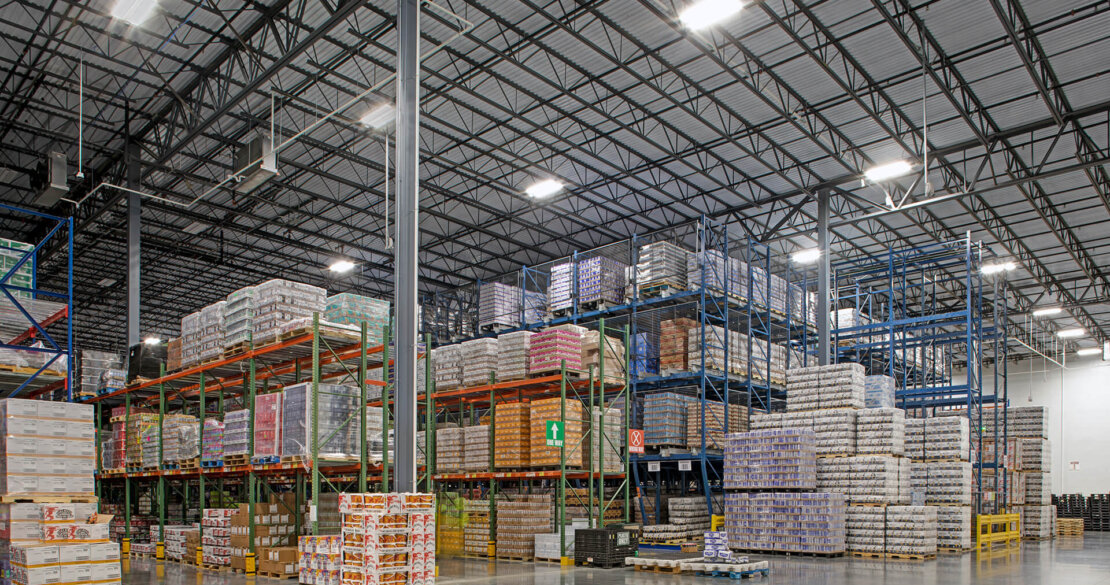
In industrial environments, workflow is everything. Unlike office or retail stores, industrial facilities are centered on processes such as receiving materials, manufacturing products, storing inventory, and shipping goods.
When industrial building design supports these operational flows, businesses can reduce inefficiencies, eliminate bottlenecks, and boost productivity.
Effective workflow design must consider:
- Clear operational zones for receiving, production, storage, and distribution
- Logical material flow that reduces unnecessary handling or travel distances
- Dock placement and loading areas that are designed for efficient logistics
- Wide aisles and circulation paths for forklifts and automated equipment
By organizing the facility around operational processes, businesses can streamline day-to-day activities while minimizing disruptions. In fact, optimized warehouse layouts improve efficiency and productivity by as much as 30%.
Safety is equally essential in manufacturing and warehouse environments. Employees are often working near heavy equipment, high shelving systems, or large material loads. Industrial buildings must be designed to reduce risks and support safe operations.
Design strategies that improve safety include:
- Clearly marked pedestrian pathways are separate from equipment routes
- Adequate lighting throughout work and storage areas
- Emergency egress planning and accessible exits
- Guardrails, safety barriers, and appropriate equipment clearances
When workflow efficiency and safety are considered together during the design process, the result is a facility that supports both productivity and worker wellbeing.
Flexibility for Future Expansion and Equipment Upgrades
Industrial operations rarely stay the same for long. New technologies emerge, production lines evolve, and companies grow. Because of this, adaptability and flexibility have become some of the most important characteristics in modern industrial building design.
Facilities designed for future growth allow businesses to adapt without costly renovations or relocating to a new space.
Several strategies can help ensure long-term flexibility, including:
Modular and Adaptable Layouts
Open floor plans and modular work areas allow production lines and equipment layouts to change over time. This flexibility is especially important for manufacturing facilities that may update equipment or shift production processes.
Structural Capacity for Equipment
Industrial buildings often house heavy machinery, storage systems, and mezzanine levels. Designing the structure to support potential future loads helps ensure the building can accommodate new equipment or expanded operations.
Infrastructure for Automation
Automation and robotics are becoming increasingly common in manufacturing and logistics facilities. Planning for adequate electrical capacity, data infrastructure, and equipment clearances ensures the building can support advanced technologies when needed.
Space for Physical Expansion
Whenever possible, site planning should account for potential building expansion or additional operational space. Leaving room for future growth can prevent costly relocation as business needs evolve.
By thinking beyond immediate needs, industrial building design can create facilities that remain valuable for decades.
Code Compliance, Structural Requirements, and Environmental Factors
Industrial buildings must meet a wide range of regulatory and structural requirements. These considerations form the foundation of responsible facility design.
Architects and engineers must address numerous factors, including:
- Local and national building codes
- Fire protection and life safety systems
- Accessibility requirements
- Environmental and stormwater regulations
- Energy efficiency standards
Fire protection systems, emergency exits, and properly rated materials are crucial in industrial environments where equipment, storage systems, and manufacturing processes may present additional risks.
Structural design is another key component. Industrial buildings often require large clear spans to accommodate manufacturing equipment or warehouse storage systems. Structural systems must support heavy loads while maintaining long-term durability.
Architects must consider structural components such as:
- Steel or reinforced concrete framing systems
- Floor slabs designed for heavy equipment and storage loads
- Roof structures capable of supporting mechanical systems or solar installations
Environmental conditions also play a role in industrial building design. Factors such as site topography, soil conditions, wind loads, and regional climate can influence everything from structural engineering to building envelope design.
Addressing these requirements early ensures the facility performs reliably while meeting all regulatory standards.
The Value of Architecture and Engineering Collaboration
Industrial projects are complex. A successful facility depends on the coordination of many systems, including structural, mechanical, electrical, and process engineering.
When architects and engineers work collaboratively from the earliest stages of design, the result is a more efficient and cohesive project.
Close coordination helps ensure that:
- Structural systems align with equipment requirements
- Mechanical systems support manufacturing processes
- Electrical infrastructure can handle operational demands
- Building layouts accommodate ventilation, utilities, and maintenance access
Without this collaboration, conflicts between systems can arise during construction, leading to costly changes or delays.
In our experience, the most successful industrial projects involve ongoing collaboration between the design team, engineers, and facility operators. When operational expertise is incorporated into the design process, the building is better equipped to support real-world workflows.
Industrial Building Design as a Long-Term Investment
Industrial buildings are significant investments that shape how businesses operate every day. When facilities are designed thoughtfully, they improve efficiency, support safety, and provide the flexibility needed to adapt to future growth. Furthermore, facility design optimizations can deliver ROI in as little as 12 to 24 months.
Modern industrial building design must balance technical expertise with a practical understanding of manufacturing, warehouse, and logistics operations. By focusing on workflow efficiency, safety, scalability, and integrated design, organizations can create facilities that support both current operations and long-term success.
Discuss Your Industrial Facility Needs
Whether you’re planning a new manufacturing facility, warehouse, or logistics center, the right design approach can make a lasting difference in how your business performs.
SAAarchitects works with industrial clients to design facilities that balance operational efficiency, safety, and future growth.
If you’re planning an industrial project, explore our industrial design portfolio to see how our team approaches complex facility design. Or contact us today to discuss your industrial facility needs and start planning a space built for optimal performance.